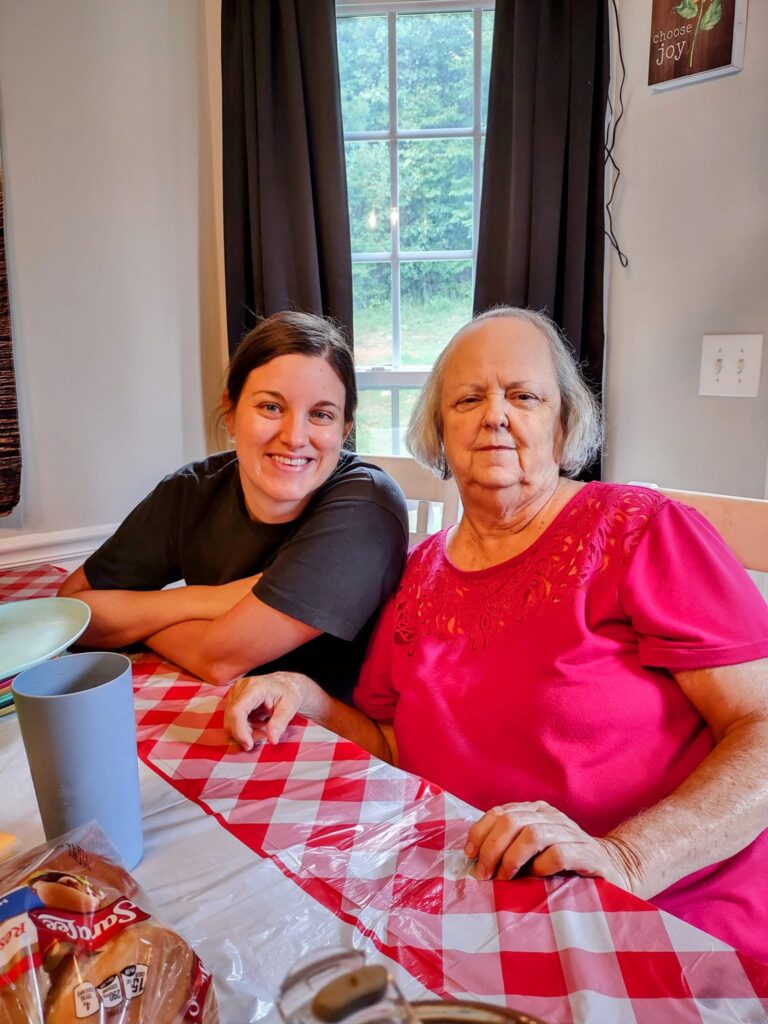
Protecting Your Heart From Anticipatory Grief
I have a heart condition. I just learned there is an actual name for it too. It’s referred to as “anticipatory grief” by professionals.
Apparently it’s a pretty common condition, especially among caregivers of the chronically sick and their loved ones.
My heart is just tired.
Not because I stayed up too late.
Not because life has been unusually busy.
My heart is tired because every time my phone rings in the middle of the night, I wonder if this is the call.
The one I’ve been quietly preparing myself for.
At 1:15 this morning, my daughter Emma gently shook my shoulder.
“Grandmama told me to wake you up. Nana is in the hospital, and she wants you to come up there.”
It’s strange how quickly your mind can wake up when your body is still exhausted.
As I sat up in bed, my heart sank.
Again.
As heartbreaking as it is to say, this isn’t unusual anymore.
I dragged myself out of bed and met my grandmother in the hallway.
“What’s going on?” I asked.
“Your mama is in the hospital. She wants us all to come up there. She thinks she’s dying.”
I could hear the urgency in her voice, but I instinctively hit the brakes.
“Hold on. Let me call her first.”
Emma looked almost appalled that I would stop to verify it. She proceeded to say, “I asked Daddy in the car the other day if Nana was dying, and he answered that it was very possible.”
The truth is, I already knew that.
Not because I lack faith.
Not because I doubt God’s ability to heal.
But because my heart has lived in this place for a long time.
My mother has been sick for years. She’s survived more hospital admissions than I can count. More emergency room visits than I can remember. Specialists. Lab work. Home health nurses. Ambulance rides.
The EMTs honestly deserve a Christmas card from our family.
I don’t say that sarcastically.
I say it with a heart that’s breaking.
When I called, my stepdad answered.
I could hear my mom in the background.
“I’m sick,” she said. “When I got to the E.R., my blood pressure was 70 over 30, and I’m septic again. They’ve got me upside down trying to get it back up.”
Then she groaned.
“I’m hurting so bad.”
I swallowed the lump in my throat.
“Emma just woke me up. I was told you wanted us all to come up there.”
“Y’all don’t all have to come,” she replied. “I just wanted to tell you that I love you. Will you call my brother and sister and tell them that too?”
I paused.
“Is there a reason you want me to tell them that at one-thirty in the morning?”
“I can’t do it right now.”
“What do you mean you can’t do it right now?”
“I’m upside down.”
About that time, my stepdad spoke up.
“Her blood pressure is up to 107 over 52. That’s much better.”
Someone interrupted them.
“I’m going for a CT scan,” Mama said. “I love you.”
“I love you too.”
As they rolled her out of the room, I asked my stepdad to call me if anything changed.
“I will,” he said.
The house became quiet again.
I walked into my grandmother’s room—which also happens to be the main living room of the house—and sank into the same worn rocking chair she rocked me in when I was little.
It squeaked beneath me.
Somehow, that old chair has held generations of joy, worry, prayers, and tears, and here it is still.
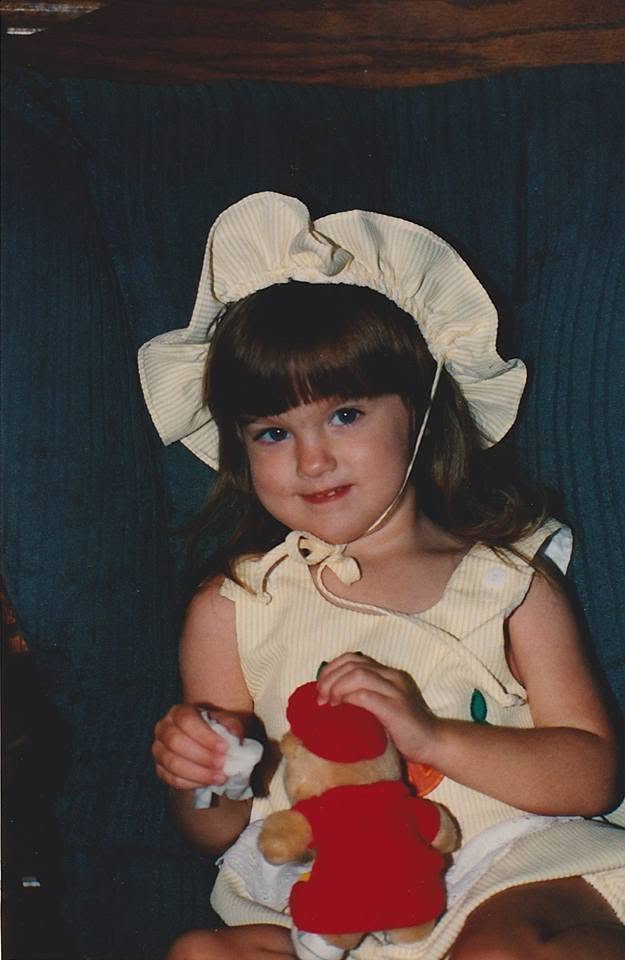
A photo of me as a little girl in the very same rocking chair.
I updated my grandmother.
Then I added my mom to my Do Not Disturb emergency bypass list and sent a message to my brother, my sister, and my sister-in-law.
I told my grandmother to try to relax and get some sleep for now.
I returned to my own bed and stared into the dark.
Tears rolled down my cheeks as I offered another prayer on her behalf in my mind.
Part of me felt selfish for not immediately driving to the hospital anyway.
But another part of me knew the truth.
My heart is tired.
Every time my mom calls, I hold my breath.
If my stepdad calls instead, I know it’s probably worse.
I’ve lost count of the hospital admissions over the last two years alone.
I’ve prayed for healing.
I’ve tried to help in every way I know how.
I’ve encouraged healthier choices.
I’ve begged her to seek second opinions.
I’ve tried to help her imagine a future where she wasn’t sick anymore.
Because hope matters.
Hope doesn’t guarantee healing.
But hope gives us something worth fighting toward.
Somewhere along the way, though, it feels like my mom stopped believing healing was possible.
She’s settled for survival.
Barely alive.
Stabilized.
But not well.
I know this isn’t the life she wanted.
I cannot imagine living inside a body that hurts all the time.
But it also hurts to watch your mother die.
One slow day at a time.
Never knowing if this hospital stay will be the last.
Part of me keeps praying for another miracle.
Another part quietly knows that if this is the time…
Heaven is better.
My heart just isn’t ready yet.
As tears rolled down my face, I found myself grieving more than her failing health.
I grieved everything life stole from her.
When I was about Emma’s age, life began unraveling thread by thread for my mom.
Divorce.
Mental illness.
The death of her father.
Foreclosure.
The loss of her career.
The loss of hope.
Little by little, it seemed her physical health followed her emotional health.
I’ve had a front-row seat to that unraveling for nearly twenty-five years.
And it’s exhausting to love someone you cannot fix.
My heart is tired.
Tired of hospital rooms.
Tired of waiting for phone calls.
Tired of wondering if this will be the one.
Tired of grieving someone who is still here.
I recently learned there’s a name for this.
Anticipatory grief.
It’s the grief that begins long before a funeral.
It’s grieving someone who is still alive.
It’s the ache of watching someone slip away one piece at a time.
It’s loving someone while simultaneously preparing yourself for a day you desperately hope never comes.
It’s holding hope in one hand and heartbreak in the other.
If you’ve ever walked this road, you know there are no easy answers.
There is only love.
There is only prayer.
There is only the quiet ache that settles into your bones after enough middle-of-the-night phone calls.
As I sat in that old rocking chair before sunrise, my thoughts drifted to my grandmother.
She’s buried her parents.
Her siblings.
Her husband.
Others she loved deeply.
And now she sits beside me, wondering if she’ll have to bury her only child.
No parent should have to do that.
Moments like these remind me why death always feels so wrong.
Because it is.
Death was never part of God’s good design.
It entered the world through sin, and every hospital room, every funeral, every tear reminds us that creation is still groaning for redemption.
But the story doesn’t end there.
Because of Jesus, death doesn’t get the final word.
One day there will be no more sepsis.
No more blood pressure crashes.
No more wheelchairs.
No more hospital beds.
No more grief.
No more tears.
No more middle-of-the-night phone calls.
No more sleepless nights because your mind can’t stop worrying.
One day every broken body will be made whole.
Every weary heart will finally rest.
Every reunion will last forever.
Until then…
We wait.
We pray.
We hope.
We cry.
And we cling to the promise that one day death itself will die.
Tonight, that’s enough hope to help this tired heart make it until morning.
Because even here—in 4 a.m. writing sessions, in hospital rooms, in the middle of the night, in the silence after bad news—there is a promise that He will wipe every tear from their eyes. There will be no more death or mourning or crying or pain (Revelation 21:4).
And when my strength is gone and my prayers feel too weak to form, I remember this: The Lord is close to the brokenhearted and saves those who are crushed in spirit (Psalm 34:18).
Not distant.
Not indifferent.
Close.
So I don’t need everything to be resolved tonight.
I just need to know I am not carrying this alone.
And maybe that is what faith looks like in the middle of the night—
not the absence of fear,
but the presence of God in it.
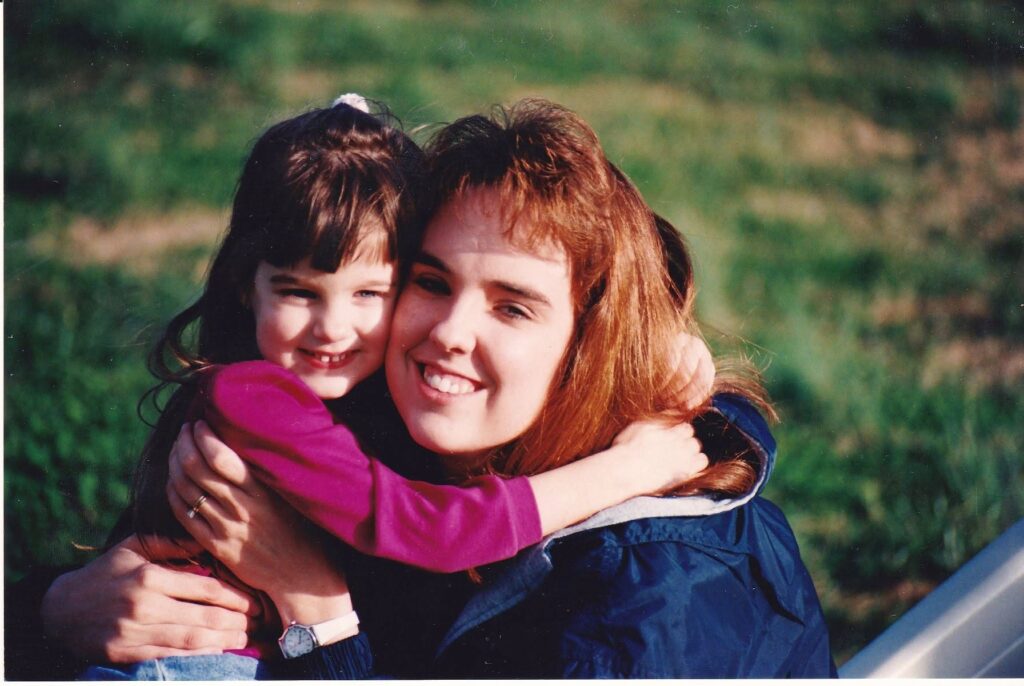
A photo of my mom and me when I was a little girl.
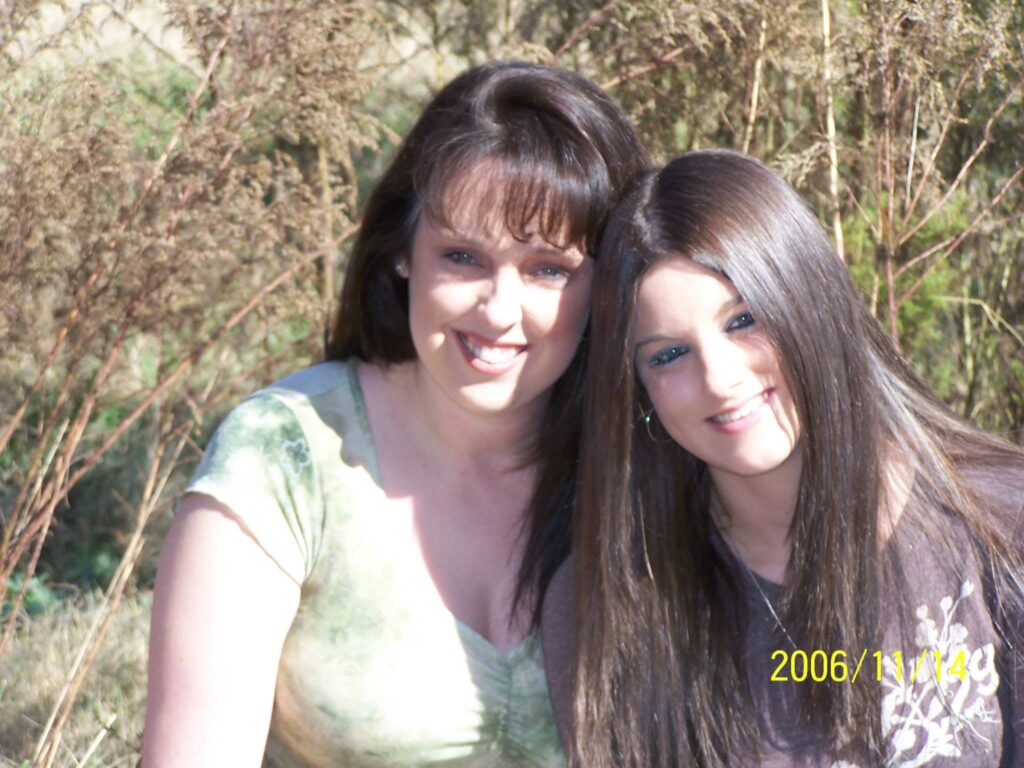
A photo of us when I was a teen.
If you would like to learn more about this blog, please check out my About page.