The Surgery Was the Easy Part: Multigenerational Family Caregiving (Part 1)
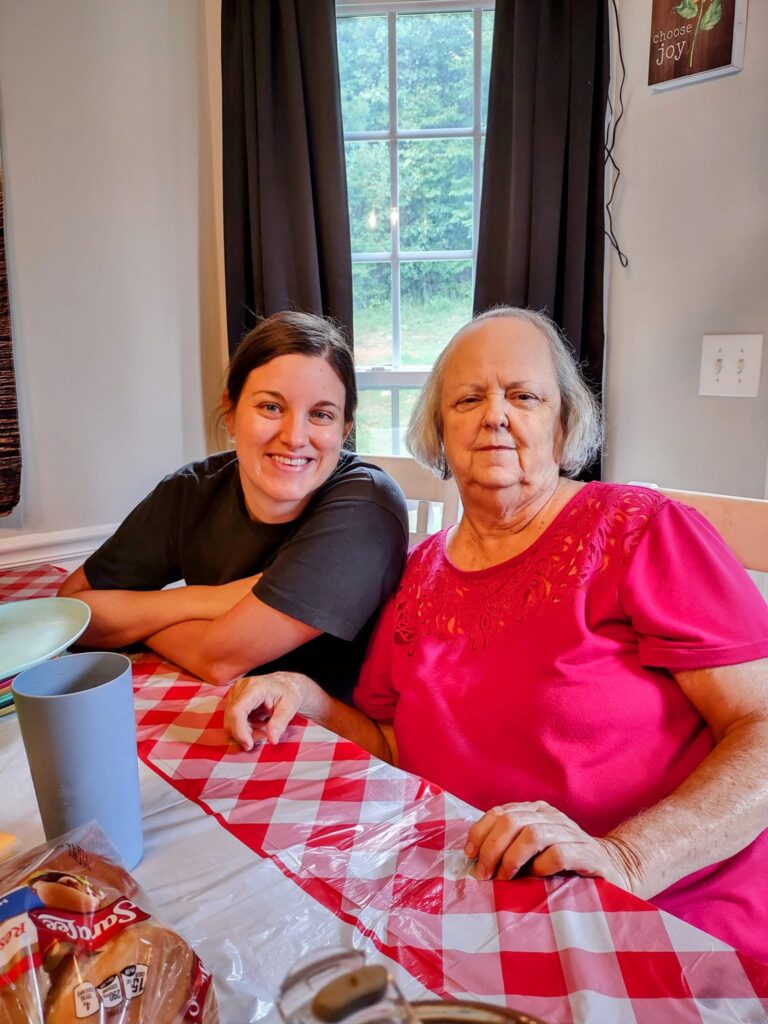
This is what multigenerational family caregiving looks like in real time—caring for an aging grandparent after a total shoulder replacement; navigating delirium and sepsis; working two part-time jobs; trying not to let the kids stay up too late and eat too much sugar; encouraging both my mom and grandmother to eat more protein; having conversations about constipation and then diarrhea; and trying not to neglect spending quality time with my husband. Whew. I’m tired just talking about it.
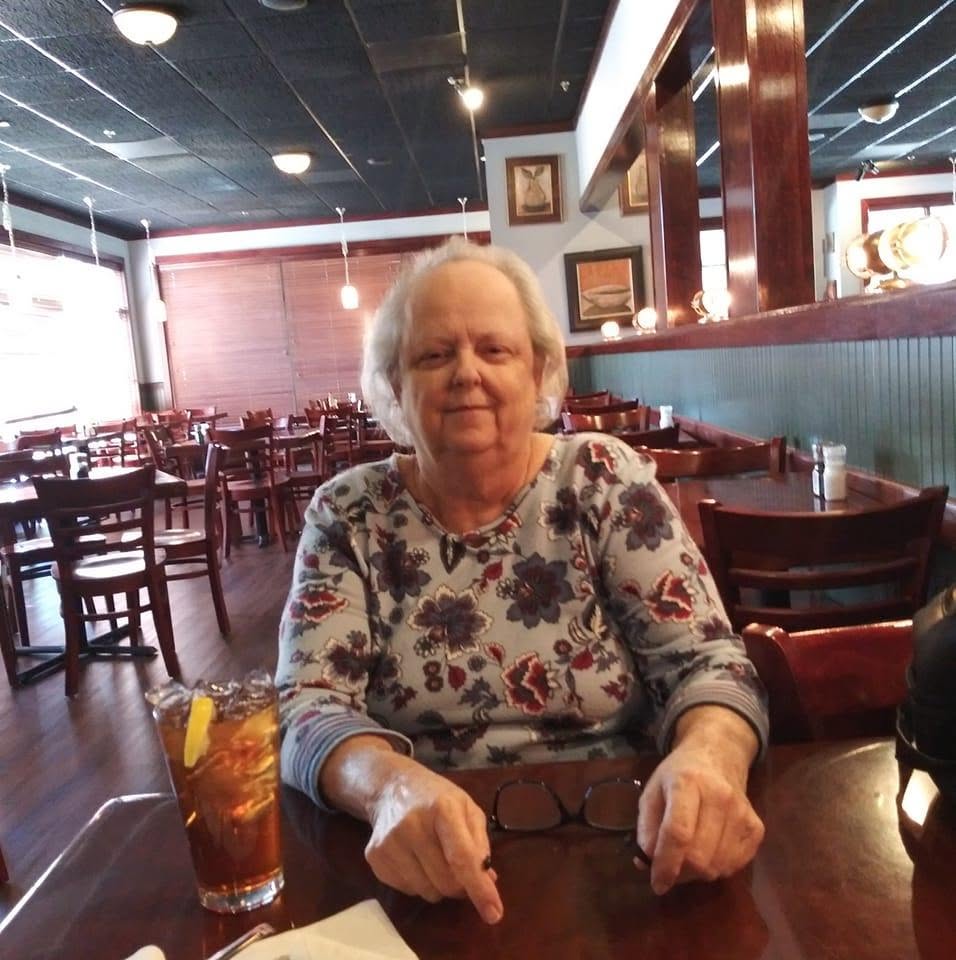
A photo of my grandmother on a normal day. Pre-fall and arm-break.
***Y’all, I’m a little late getting this posted. Because, life. Anyhow, we are actually 21 days post-surgery now, but I started writing this on the 8th day post-op.***
post-op with my aging grandmother
“Jesus, take the wheel.”
My response to approximately the last seventeen times my phone has rung today.
It’s officially eight days post-op for my grandmother.
Did I mention she was having a total shoulder replacement?
Yep. It finally happened.
We looked forward to surgery with the hope that it would bring more manageable pain, improved mobility, and a real starting point for healing and recovery.
What I didn’t realize was that surgery wasn’t the finish line.
It was the starting gun.
If you’ve ever been involved in family caregiving or multigenerational living, you know that medical procedures don’t begin in the operating room. They begin weeks beforehand with enough paperwork to qualify as a part-time job.
There were medical clearance forms.
Medication adjustments.
Pre-op appointments.
Anesthesia testing.
My grandmother had to use an incentive spirometer—a little plastic breathing device that looks deceptively simple but helps patients take deep breaths after surgery and reduces the risk of developing pneumonia from shallow breathing.
It’s actually like a game. You have to suck in at just the right depth to maintain the smiley face between the two green lines for as long as you can. My grandmother didn’t think it was a very fun game, though. It was actually pretty challenging for her!
Anyhow, continuing on…
She had antibiotic ointment applied inside each nostril twice a day leading up to surgery.
She had to shower with antiseptic soap the night before and the morning of surgery.
And of course, there was the mandatory fasting period, otherwise known as “the quickest way to make an elderly woman ‘hangry’.”
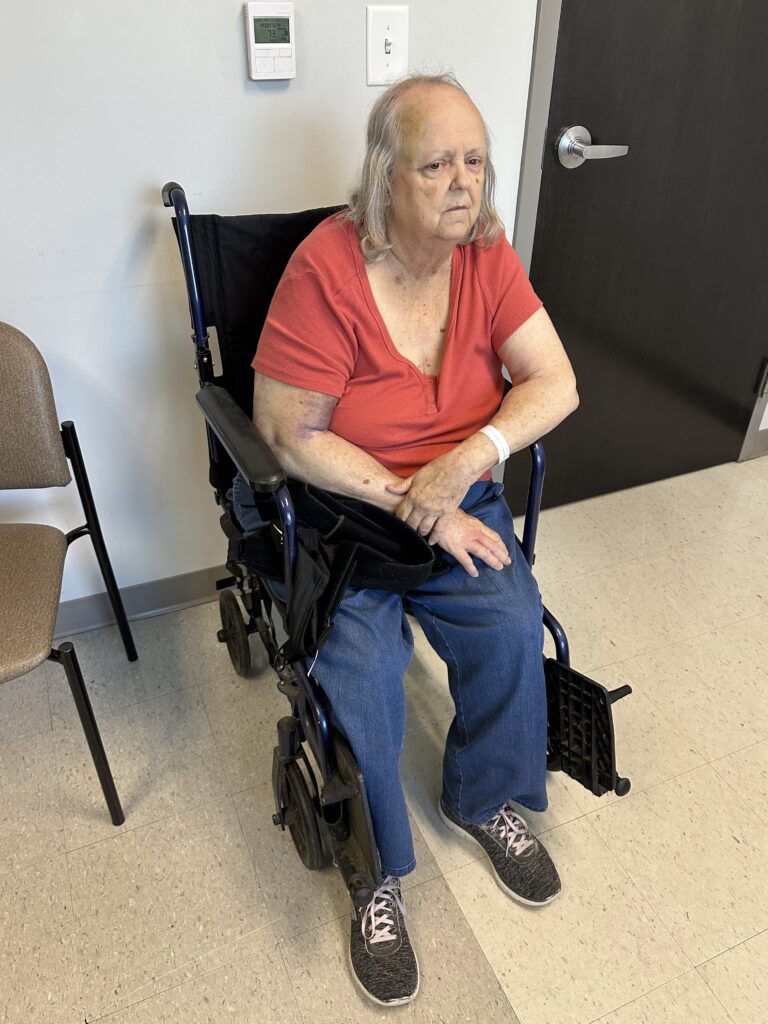
A photo from our first pre-op appointment. If she sees this, she will probably kill me. I didn’t even dare take a post-op picture! Peep all the bruising. I know she was in terrible pain; I felt so bad for her.
surgery at 5:15 a.m. what??!!!
Surgery day arrived.
My grandmother had to be at the surgery center at 5:15 in the morning.
Thankfully, my mom handled the early-morning shift while I arrived a few hours later carrying what I considered essential medical supplies:
Chick-fil-A breakfast and a freshly filled oxygen tank for my mom.
One feeds the body.
The other keeps it functioning.
Both equally important.
In a strange twist of small-town life, one of my coworkers’ husbands was scheduled for surgery that same morning and ended up recovering right on the other side of the curtain. (Because apparently even surgery day means gathering with your coworkers in recovery. You never really do get a day off, do you?)
So, apparently shoulder replacement patients are typically kept overnight for observation, so after recovery, my mom headed home to rest while I stayed with my grandmother, waiting for a room on the orthopedic floor.
And waited.
And waited.
Around 5:00 p.m., we finally got one.
post-operative delirium in the elderly
At the time, I felt grateful that there were nurses, aides, and medical staff keeping an eye on her while she recovered from surgery.
I had no idea how thankful I’d soon be for those extra eyes.
Because sometime during the night, postoperative delirium entered the chat.
And so did a new term I had never heard before:
Sundowning. Or sundowning-like symptoms.
According to the Mayo Clinic, the term “sundowning” refers to a state of confusion that occurs in the late afternoon and lasts into the night. Sundowning can cause various behaviors, such as confusion, anxiety, aggression, or ignoring directions. Sundowning also can lead to pacing or wandering.
Sundowning isn’t a disease. It’s a group of symptoms that occurs at a specific time of the day. These symptoms may affect people with Alzheimer’s disease and other types of dementia. The exact cause of sundowning is not known.
However, my grandmother does NOT have dementia or Alzheimer’s disease, and the symptoms did NOT end with the night.
The next morning, while I was at work, my phone rang.
It was my mother.
Demanding that I come to the hospital immediately.
Now, in the interest of complete honesty, my mother occasionally has a flair for the dramatic.
So I assumed she was probably exaggerating.
She was not.
Forty-five minutes later, I walked onto the hospital floor and was immediately stopped by a nurse in the hallway.
“Room 13?” he asked.
“Yes,” I replied.
The look on his face told me everything I needed to know.
He explained that my grandmother had become confused, angry, aggressive, and deeply suspicious of everyone around her. She was struggling to distinguish what was real from what wasn’t.
The woman who normally wanted nothing more than to go home suddenly trusted no one.
Especially my mother.
Hospital staff determined she could not safely be left alone and assigned someone to stay with her around the clock because she had become a potential danger to herself.
Watching someone you love experience delirium is unsettling.
It’s like having the same person physically present while their mind temporarily moves somewhere else entirely.
Nothing prepares you for it.
going home…maybe.
Nevertheless, the following day she was discharged.
That discharge lasted approximately a few miles.
Before my mother turned around and drove her straight back to the emergency room.
Somewhere during that short trip, a few choice words were exchanged.
My mother was attempting to help organize medications and discharge instructions.
My grandmother saw it as an attempt to take away her independence.
Neither one intended harm.
Both were exhausted.
And fear has a funny way of disguising itself as anger.
Thankfully, my grandmother agreed to walk back into the hospital for evaluation.
Because as it turns out, returning may have saved her life.
Of course there are complications
After additional testing and lab work, doctors diagnosed her with sepsis.
Suddenly, the confusion and delirium made a lot more sense.
Several more days passed before the delirium finally began to resolve.
Little by little, the grandmother we recognized started returning.
Her personality came back.
Her humor came back.
Her memories came back.
And eventually, I got to do something we’d all been waiting for.
I picked her up and brought her home.
I’ve never seen someone so excited to leave a hospital.
She practically floated out of there.
Of course, getting her home was only the beginning.
Multigenerational Family Caregiving After Surgery: When the Real Work Begins
Because now came the real challenge:
Home health.
Physical therapy.
Occupational therapy.
Bath aides.
Social services.
Medication reconciliation.
Follow-up appointments.
And figuring out who exactly was supposed to be doing what.
But that’s a story for Part 2.
And trust me—you won’t want to miss it.
If you would like to read Multigenerational Family Caregiving: After Surgery (Part 2), check it out here.